


I was there at the birth of both the IBM PC in 1981 and the Apple Macintosh in early 1984. Both of these were very significant technological milestones for humanity. The latter created a particular emotional rush.
In those days, developing clients (when selling tech to them) was a personal process. You visited them, befriended them, worked with them. You knew their issues and how to ease the pain those issues caused. Spending time in their businesses was a privilege – I saw inside different industries, different cultures, and I witnessed the birth of so many great ideas.
By the time I was in my late thirties my knowledge of the tech industry and all its many quirks had served me well. Then, ‘supply chain management’ arrived. All of a sudden, everything shifted. It was no longer about how good you were developing relationships, but how good you were jockeying algorithms.
What followed for me was a shift away from front line selling and into ‘program management’ and ‘influencing’. It was ‘selling’ – but with a whole slew of obscure job titles that added to the general professional bafflement.
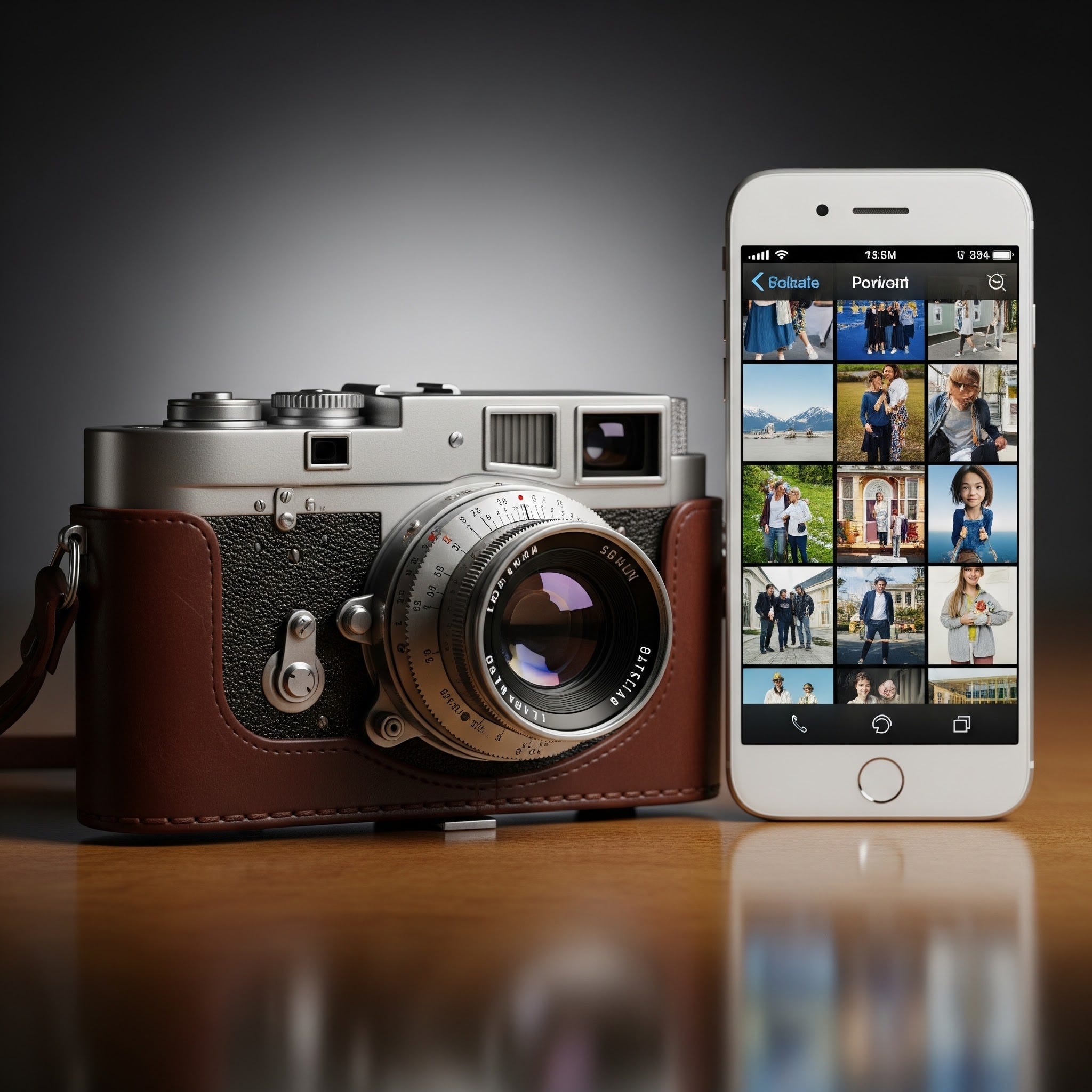
In tandem, as a photographer since my teens, I transitioned to digital photography. At last – no more fretting about carefully calculating exposures, or angst about running out of my 12 exposures on a roll of film. It was such a rush being free of such constraints. I was also editing video.
Then, the crash happened, and to cut a long story very short indeed – I decided to have a career switch. The industry I’d worked in for 25 years was suddenly ‘wall-to-wall’ apps on smart phones and 20-somethings beginning the slow (but relentless) quest to shut the real world out from behind earbuds. Whether it was instinct, or a rush of madness, I jumped. I was touching 50 and I felt like Grandad. With some nice compliments from similarly aged colleagues, I plunged into the post-apocalyptic world and had a fairly sizable shift into specialised landscaping (essentially putting plant walls onto the sides of buildings) and dabbling in overseas property. I went back to school part time to learn design in my late 50’s.
Switching careers at that age is not for the faint of heart. Let’s just add that a global recession, an ageing body and the largest global architected ‘disease’ psyop of all time are not the most fertile conditions for embryonic growth of new enterprises! Add in the ‘Poseidon Adventure’ effect of white middle-aged, heterosexual men suddenly finding themselves at the very bottom of the UK societal pecking order – and what followed was pretty much a ‘lost decade’.
Turning 60 became a watershed moment. I was in a bookshop in Norwich and suddenly realised that I was a deeply analogue person who had been ‘temporarily hijacked’ by a tsunami of digital development – technologically, societally and culturally. As I recently saw on a You Tube interview video by a young twenty-something addressing baby boomers: “you allowed technology to just let rip”. Yes, young Sir, we did. Please don’t judge us too harshly – it snowballed out of our control. In fact, we never had any control.
Analogue got swept out of fashion because those using it had control. My late father – a Chartered engineer – built his own radiogram and made his own furniture when we were little. He serviced the family car himself and I inherited my love of horticulture from both my parents, who were prolific in that department too.
Clothes in many households got made (or altered). I once popped into a London dry-cleaners on the way back to the office after a nice lunch with a client. They told us that they had a suit in for cleaning that had spanned three generations from the 1930’s. It was still in great shape.
So began a love affair with vintage clothing. As I’m typing this, I am also researching the demise of the Northampton shoe and boot making industry. I’ve visited and photographed the last ‘proper’ shoe and boot factory in Derbyshire – who have a very full order book stretching out over a year – with eager clients all over the world craving hand-made boots.
Working clothing is mostly made in Asia or the heavily subsidised countries in the European block. Much of it is not well made – and largely disposable. Fashion clothing even worse – with major retail chains a few years ago caught dumping excess runs of lines directly into vast tracts of South American desert (labels still attached), hoping the sun and the weather would eventually rot them to ribbons without detection.
Whilst we are daily lectured and preached all sorts of nonsense about ‘sustainability’ – real sustainability is under all our noses – and it’s mainly analogue. I’m a prolific collector of vintage boots, shoes and clothes. I’m in the throes of sifting, sorting, photographing and re-selling them many of them on to a new audience. I’m delighted to report that some of that audience is quite young. Their desire for micro-wardrobes driving less – but better made - clothing.
So, what is my conclusion? I’m drifting boldly where a few more are going with me. I do not hate the digital world. I love the fact that (in its purest, unmolested state) it provides the vast majority of eight billion people an ‘eighth wonder of the world’ level content and communication platform which allows everyone to find everyone else and ‘share’.
That’s an epic achievement in the span of a couple of generations. But, as will befall all great innovation, there have been a lot of abuses of this wonderful technology. Tim Berners-Lee did a wonderful Christmas Reith lecture on these actual and potential further abuses. You won’t (of course) find that lecture on iPlayer.
I hope we will see a ‘recalibration’ of digital usage as a backdrop to analogue creativity. Digital cannot match the numerology and beauty of natural flora and fauna. It cannot transmit the soul of a hand-finished image painted or taken on canvas or on film. It cannot write with soul.
We are at a crossroads now. What happens next is entirely up to the collective will of eight billion souls on this wonderful planet.
The Great Clean Up (Richard Francis)
Thanks Jeff. I appreciate your support. As I stated in a reply below - it’s not just photography, art & clothing that are important analogue instruments. The biggest analogue instrument we can support is CASH!
#keepcash will be an excellent regulatory valve to curb the worst excesses of digital technocracy.
Westminster & our somewhat feeble sovereign monarch want the UK to go ‘wall to wall’ digital. They are foolish in my view - as are those who support this. By supporting digital everything - we hand over control of our entire nation to large predatory corporate interests such as banking cartels & multi trillion dollar asset conglomerates such as Blackrock.
We’re already seeing ‘public’ organisations such as the Land Registry digitising & holding title deeds electronically for property in the UK. It’s being sold as a ‘benefit’ to property owners - due to potential fire risks of paper ones. This is ridiculous as this is what fireproof safes & secure storage centres were invented for?
Analogue gives us more control. I want to drive my own car, own my own assets & keep my own (hard fought for by my ancestors) freedoms.
For me the most vital analogue thing to try to keep is the copper landline - anyone with VOIP is exposed to internet and electricity outages. These can affect mobiles too. Battery back-up is not enough. Anyone who is uncomfortabe with tech, elderly, confused or unwell is in danger. We need the simplicity, reliability and security of analogue landlines. Talk Talk business has Metallic Path Facility Lines which will, in most areas, help people to stay analogue until 2030. You have to be a sole trader or be prepared to say you are.